
Interculturalism vs Multiculturalism: A Strategic Guide for Cohesion
For decades, policymakers and community leaders have relied on multiculturalism as the primary framework for managing diversity. However, a significant shift is occurring in social cohesion strategy across Australia. According to recent analyses of community engagement outcomes, interculturalism is increasingly recognized as a more active model for building connected societies than passive coexistence. This distinction is critical for organizations seeking to move beyond tolerance toward genuine integration. (Mosaic Intercultural Solutions Intercultural)
Defining Interculturalism and Its Core Principles
To understand the strategic value of interculturalism, we must first establish a clear definition. Interculturalism is a dynamic approach to diversity that emphasizes active interaction, mutual exchange, and the co-creation of shared values among diverse groups. Unlike models that focus on the preservation of distinct cultural identities in parallel, interculturalism seeks to build bridges between those identities. (Amiel Nubaha Mosaic Intercultural)
This framework is particularly relevant in the Australian context, where the population is increasingly diverse. The goal is not merely to have different cultures living side by side, but to foster relationships that strengthen social cohesion. This requires intentional design in community programs, policy making, and organizational culture. (Donna Sherwani Mosaic Intercultural)
At Mosaic Intercultural Solutions, we recognize that diversity is only the beginning. Cohesion belongs to connected communities. Our work is grounded in the understanding that meaningful change requires more than representation. It requires structural engagement that empowers all voices to shape the collective future.
Multiculturalism vs Interculturalism: Key Differences
While often used interchangeably in casual conversation, multiculturalism and interculturalism represent distinct philosophical and operational approaches to diversity. Understanding this difference is essential for effective community leadership and policy development.
The Multicultural Model
Multiculturalism is a policy framework that recognizes and supports the right of individuals to maintain their cultural identity while participating in the broader society. It focuses on tolerance, equality, and the protection of minority rights. The underlying assumption is that a diverse society is strengthened by the preservation of distinct cultural groups.
However, critics argue that multiculturalism can sometimes lead to parallel lives, where communities exist in close proximity but remain socially and emotionally disconnected. This model prioritizes inclusion through recognition rather than interaction.
The Intercultural Model
Interculturalism goes a step further by prioritizing interaction and exchange. It assumes that diversity is a resource for innovation and social resilience, but only if it is actively managed through dialogue and shared experiences. This model encourages individuals to engage with others across cultural boundaries, fostering a sense of shared belonging.
The key difference lies in the outcome. Multiculturalism aims for a mosaic of distinct pieces. Interculturalism aims for a woven tapestry where the threads are interdependent. This shift requires a change in mindset from "managing diversity" to "leveraging diversity for cohesion."
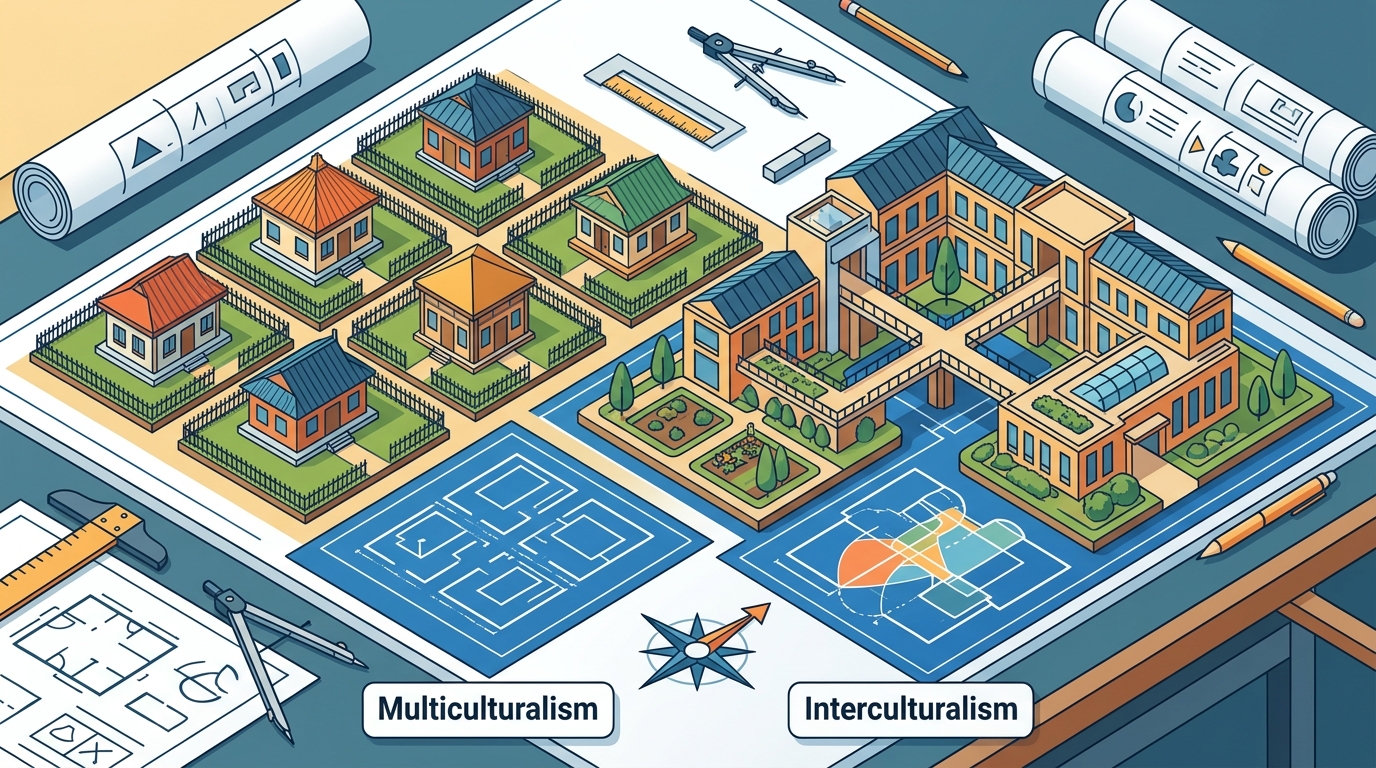
Comparative Analysis
| Feature | Multiculturalism | Interculturalism |
|---|---|---|
| Primary Goal | Tolerance and preservation of identity | Active engagement and shared values |
| Social Structure | Parallel communities | Integrated and connected networks |
| Policy Focus | Anti-discrimination and rights | Co-design and community listening |
| Outcome | Diversity as a static fact | Diversity as a dynamic resource |
Operational Strategies for Community Cohesion
Translating the theory of interculturalism into practice requires specific operational strategies. These strategies are designed to break down barriers and create spaces for meaningful interaction. One of the most effective methods is community codesign workshops.
Community Codesign Workshops
Community codesign workshops involve local residents in the development of policies and strategies that affect them. This approach ensures that solutions are shaped by local experience rather than external assumptions. By involving people affected by the policy, organizations can test proposed priorities with residents and develop practical actions together.
The result is a strategy that has early insight into what residents support, question, or oppose. This reduces the risk of policy failure and increases community buy-in. For example, our work with local councils has demonstrated that when residents are part of the design process, the resulting initiatives are more sustainable and culturally responsive.
Professional Development and Cultural Intelligence
Organizations must also invest in the cultural intelligence (CQ) of their staff. This involves training professionals to navigate complex cultural dynamics and recognize their own biases. Our team provides professional development programs that help leaders develop nuanced understandings of racial dynamics and cultural identity in workplace and educational settings.
This training is not just about awareness. It is about building the skills to facilitate difficult conversations and resolve conflicts constructively. By enhancing the CQ of their teams, organizations can create more inclusive environments that support intercultural exchange.
Intercultural Policy Development in Practice
Intercultural policy development is a specialized field that requires deep expertise in both social science and practical implementation. It involves creating frameworks that support active engagement rather than passive tolerance. This includes everything from grant funding criteria to public service delivery models.
Grant Impact on Social Cohesion
One critical area of focus is the impact of grants on social cohesion. Traditional funding models often prioritize cultural preservation activities. Intercultural funding models, however, prioritize projects that foster interaction between diverse groups. This shift in funding criteria can significantly influence the types of community initiatives that emerge.
For instance, funding might be directed toward joint projects between different cultural groups, rather than separate cultural festivals. This encourages collaboration and shared ownership of community outcomes. Our research into grant impact on social cohesion has shown that this approach leads to stronger, more resilient community networks.
Elected Member and Executive Briefings
Effective policy change requires buy-in from decision-makers. Elected member and executive briefings provide a platform for sharing evidence-based insights with those in power. These briefings translate complex social dynamics into actionable recommendations for policy and practice.
By providing clear, data-driven insights, we help leaders understand the value of intercultural approaches. This includes demonstrating how intercultural strategies can reduce social fragmentation and improve public service outcomes. Our team has extensive experience in delivering these briefings to government bodies and corporate leaders.
Key Takeaways
- Definition: Interculturalism is a dynamic approach to diversity that emphasizes active interaction and the co-creation of shared values.
- Distinction: Unlike multiculturalism, which focuses on parallel coexistence, interculturalism prioritizes active engagement and mutual exchange.
- Strategy: Community codesign workshops are a key operational tool for ensuring policies are shaped by local experience.
- Policy: Intercultural policy development requires a shift in funding criteria to prioritize interaction over preservation.
- Leadership: Elected member and executive briefings are essential for translating intercultural insights into actionable policy.
- Outcome: The goal is to move from tolerance to genuine social cohesion and connected communities.
Frequently Asked Questions
What is the main difference between multiculturalism and interculturalism?
Multiculturalism focuses on the recognition and preservation of distinct cultural identities, often leading to parallel communities. Interculturalism emphasizes active interaction, dialogue, and the co-creation of shared values among diverse groups to build social cohesion.
Why is interculturalism considered more effective for social cohesion?
Interculturalism is considered more effective because it moves beyond tolerance to active engagement. By fostering direct interaction and shared experiences, it builds stronger relationships and a sense of belonging across cultural boundaries.
How do community codesign workshops support interculturalism?
Community codesign workshops involve residents in the development of policies and strategies. This ensures that solutions are shaped by local experience and diverse perspectives, leading to more inclusive and sustainable outcomes.
What role does cultural intelligence play in interculturalism?
Cultural intelligence (CQ) is the ability to relate and work effectively across cultures. In interculturalism, high CQ is essential for professionals to navigate complex cultural dynamics, facilitate dialogue, and resolve conflicts constructively.
How can organizations implement intercultural policy?
Organizations can implement intercultural policy by revising funding criteria to prioritize interaction, providing professional development on cultural intelligence, and engaging in community codesign processes to ensure policies reflect diverse needs.
What is the role of elected members in promoting interculturalism?
Elected members play a crucial role by adopting policies that support active engagement and by providing executive briefings that highlight the benefits of intercultural approaches for social cohesion and public service delivery.
Is interculturalism only relevant for government bodies?
No, interculturalism is relevant for all sectors, including corporate, educational, and nonprofit organizations. Any entity that interacts with diverse populations can benefit from applying intercultural principles to build stronger relationships and more inclusive environments.
Start Building Connected Communities Today
Transitioning from multiculturalism to interculturalism is not just a theoretical shift. It is a practical imperative for building resilient, cohesive societies. Whether you are a government body, a corporate leader, or a community organization, the strategies we employ can make a tangible difference.
At Mosaic Intercultural Solutions, we specialize in helping organizations navigate this transition. From community codesign workshops to executive briefings, we provide the expertise and tools needed to foster genuine intercultural connection. We are located on the unceded Country of the Boon Wurrung and Woiwurrung people of the Kulin nation, and we are committed to contributing to a positive intercultural future with Australia's First Nations communities.
Ready to transform your approach to diversity? Contact us today to schedule a consultation and learn how we can support your journey toward social cohesion.